Coming Home to Tenderness
It has been eleven days since I returned from a four-week trip to Bolivia. Slowly, I’ve been recovering my energy, reorganising my body clock, and adjusting to the colder, shorter days. Four weeks of warmth and sunshine was a gift in itself, but my gratitude is felt for so much more than the weather.
I knew it would take me a while to settle back into my old routine and daily rhythm, but what I hadn’t quite expected was how tender my heart would feel.
Despite having a loving family and a warm home to return to, I’ve been sitting with feelings of sadness and loss since I got back. It hasn’t been debilitating, but it has been noticeable. Having done a lot of my own trauma and recovery work over the years, I’m very familiar with my inner landscape – my bodily sensations and my emotions. I know what grief feels like, and I have a strong level of self-awareness when it comes to my own addictive behaviours.
Thankfully, I also have a well-established self-compassion practice, thanks to the likes of Kristin Neff and Tara Brach, so I no longer beat myself up if my scrolling, online shopping, and sugar consumption suddenly find their feet again. I haven’t regained my morning meditation practice yet, even though it’s exactly what I need. Dark mornings make it harder to get up, and right now I feel too distracted to settle into stillness.
Once upon a time, I would have found comfort in a bottle of white wine or a few gin and tonics each night, slowly spiralling deeper into a pit of irritability and self-castigation. Not anymore. I got off that sinking ship before it reached rock bottom, and I have no intention of climbing back aboard.
Naming the Grief
So what has caused this ripple of grief and sadness?
It’s not the British weather. I mean, it can get tedious, but I do enjoy wearing hats and jumpers and snuggling up in front of a fire despite grumbling about it. No, what has been hurting my heart is the loss of connection: living in community with other like-minded souls.
Living Inside Community
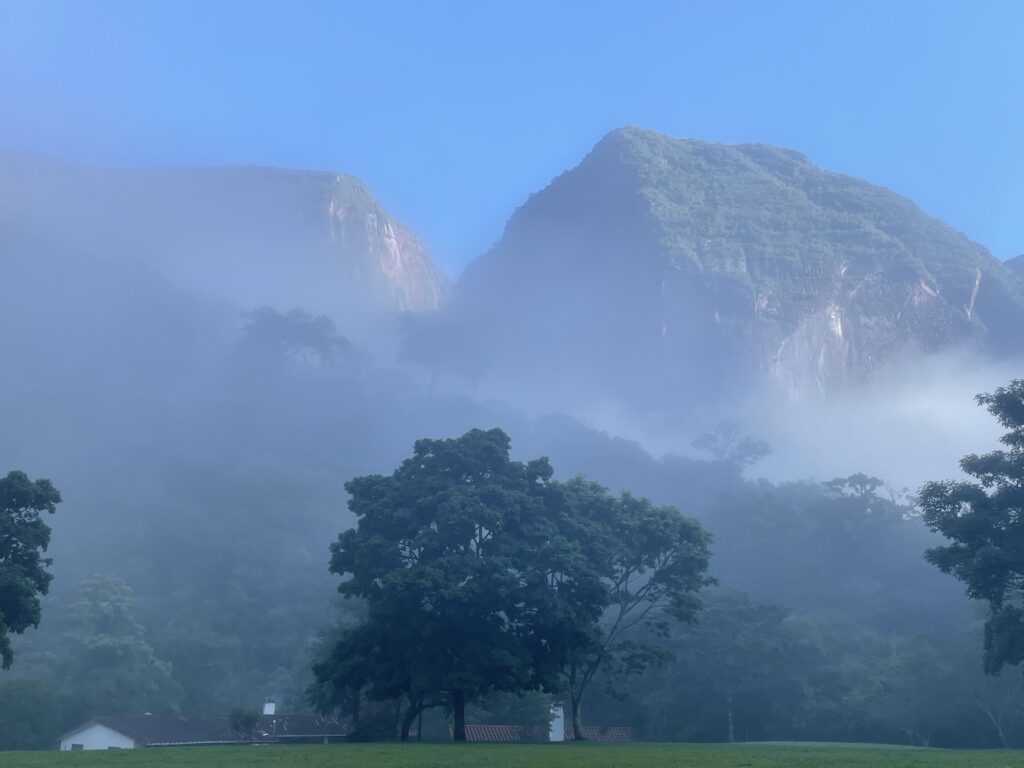
I went to Bolivia as a volunteer, supporting two different week-long retreats in the beautiful grounds and surroundings of Refugio Los Volcanes. During their time there, retreat participants did some deep and profound inner work and came together as a community. Across each retreat, I witnessed friendships form and bonds grow in the most beautiful way. People moved from disconnection, within themselves and with others, into meaningful connection: back to themselves, with one another, and with their environment.
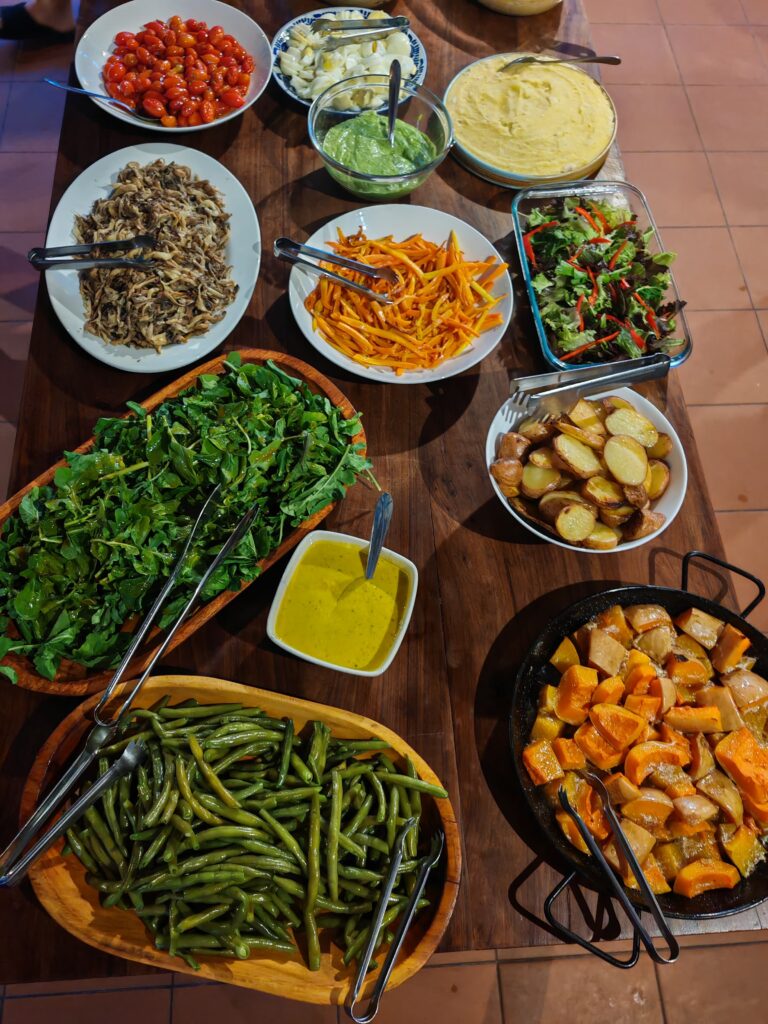
My experience of working with the facilitation team was equally beautiful. We were seven strong for the first retreat and eleven of us for the second, supporting twenty participants. We became our own family within the wider community that had formed. Every day we ate together. Every morning began with an open-hearted check-in: How did you sleep? Is there anything you need today? Oh, you’re feeling ill? Stay in bed, someone will bring you soup.
The care and compassion among us was honestly… next level. Alongside the depth of care, we also had fun. We hiked, swam, laughed, and played – as a team, as friends, and eventually as something that began to feel like family.
A Nervous System That Knows
What surprised me most on returning home was not that I felt sad, but how clear the source of that sadness felt. It isn’t depression, and it isn’t a regression. It’s grief, the kind that comes when something deeply nourishing is suddenly absent.
For four weeks, I lived inside a rhythm that our nervous systems recognise instinctively. Days shaped around shared meals, shared purpose, and shared rest. People checking in with one another not out of obligation, but genuine care. Needs were noticed and responded to quickly – emotionally, practically, relationally. No one had to earn their place or justify their exhaustion.
This is what Johann Hari points to in Lost Connections when he writes that “loneliness isn’t the physical absence of other people – it’s the sense that you’re not sharing anything that matters.” In Bolivia, we were sharing what mattered – our inner lives, our vulnerabilities, our labour, and our joy. We were living inside what Hari describes as a dense web of connection and meaning.
Coming home has meant returning to a culture where connection must be scheduled, squeezed in between responsibilities, or mediated through screens. Where care is often assumed rather than actively expressed. Where we may live physically close to others, yet emotionally and rhythmically apart.
From the perspective of Gabor Maté, this contrast matters deeply. In The Myth of Normal, he reminds us that many of the struggles we experience are not signs of individual dysfunction, but normal responses to abnormal environments. Our nervous systems evolved to be regulated together. We are wired for co-regulation, for being seen, soothed, and understood in relationship. When that context disappears, the body doesn’t interpret it as inconvenience; it experiences it as loss.
As Maté writes, “Trauma is not what happens to you, but what happens inside you.” When connection, safety, and attunement are absent, something inside us tightens, grieves, and longs – even if, on the surface, our lives appear “fine.”
And so the sadness makes sense.
Remembering What We Are Built For
Gordon Neufeld would describe this in the language of attachment. Humans, he says, are meant to be embedded in caring relationships – not just in childhood, but across the lifespan. Secure attachment is not the opposite of independence; it is the soil from which resilience, authenticity, and emotional maturity grow.
Neufeld reminds us that “to promote individuation, we must first provide a deep sense of belonging.” What we created together in Bolivia was a temporary attachment village, one where care flowed freely, where needs were noticed without explanation, and where no one had to carry everything alone.
Of course my heart hurts when that village dissolves.
Not Broken, Just Remembering
What I find comforting now is this reframing: this tenderness isn’t something to fix or medicate away. It’s not a failure to cope better with modern life. It’s a healthy nervous system responding honestly to disconnection.
I am not broken.
I am remembering.
Remembering what it feels like to live in community.
Remembering how the body settles when it is consistently met.
Remembering that healing doesn’t happen in isolation, but in relationship.
Perhaps this grief is also an invitation, not to recreate Bolivia exactly (because that isn’t realistic), but to question what we’ve normalised. To ask how we might weave more care, more presence, and more togetherness into our everyday lives. To resist the idea that independence and productivity matter more than belonging.
If nothing else, my heart’s tenderness feels like proof that I am still open. Still capable of deep connection. Still oriented toward community.
And maybe that is something to honour, even as I pull on my jumper, light the fire, and slowly find my way home again.
If you’re reading this and feeling a familiar tenderness, know that you’re not alone. You might share this piece with someone who understands, or reach out to a person with whom you feel safe enough to show up authentically, where there is no performance required.
Further Reading
If you’d like to explore some of the ideas touched on in this reflection more deeply, the following books have been formative for me and may offer further insight into connection, trauma, self compassion and what it means to live well together.
- Lost Connections – Johann Hari
An exploration of depression and anxiety that shifts the focus from individual pathology to disconnection — from community, meaning, nature, and one another. - The Myth of Normal – Gabor Maté (with Daniel Maté)
A compassionate examination of trauma, illness, and culture, inviting us to question what we’ve come to accept as “normal” in modern society. - Hold On to Your Kids – Gordon Neufeld & Gabor Maté
While written with parenting in mind, this book offers profound insight into attachment, belonging, and the relational foundations that humans of all ages need to thrive. - Self-Compassion – Kristin Neff
A practical and research-informed guide to developing kindness toward ourselves, especially in moments of struggle or perceived failure. - Radical Acceptance – Tara Brach
A gentle exploration of mindfulness, compassion, and the healing that becomes possible when we stop fighting our inner experience.
What a thoughtful and tender insight into something I hope more people experience in their lifetimes. This bittersweet longing is something I can relate to from my teacher training courses in India. Reading your words and vocabulary for loss and grief helps me to understand why it was so difficult when I returned home. Here’s to creating a community in Horsham for 2026. Thank you for your brave and beautifully written blog.
Thank you for your comment Rachel, it’s always encouraging to know how my words resonate and touch others. Yes, here’s to building community in 2026!
You wrote about this so beautifully Nancy, thank you. Your writing then poses a question for me. How do we go about creating this connection in our ‘normal’ lives?
I often hear myself say ‘if I can’t find it I need to make it’ right?
Here is to sharing many more connected moments with you.
🙏❤️
Indeed dear Kev, indeed. Much love and thank you for reading 💗